Berkshires
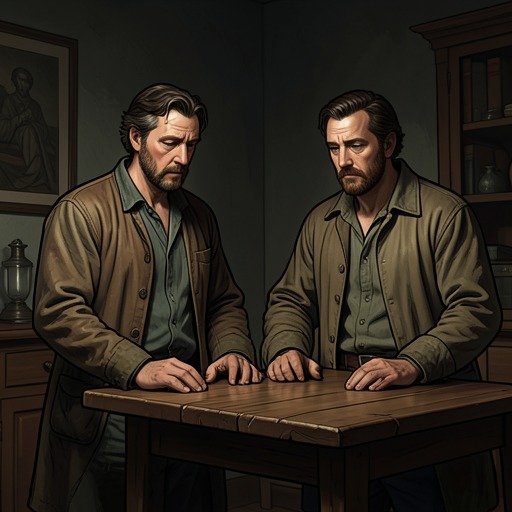
The WhaleThe Berkshires are the setting for the 1850 meeting of Herman Melville and Nathaniel Hawthorne, a consequential encounter that developed into a close friendship and helped shape Melville’s literary life. The region’s towns, mountain paths, and nearby homes place their relationship in a particular geography: Melville’s restless, sea-formed imagination meets Hawthorne’s inward, historically burdened sensibility amid the Massachusetts countryside.
Setting and literary geography
In western Massachusetts, the Berkshires brought Melville and Hawthorne within reach of one another while offering a marked alternative to the urban world Melville had left behind. In the summer of 1850, Melville was staying with his aunt in nearby Pittsfield. There he read Hawthorne’s Mosses from an Old Manse, whose evocation of old New England made a powerful impression on him. Hawthorne, meanwhile, had settled in Lenox, drawn to the landscape’s beauty and hoping to work on The House of the Seven Gables. The countryside did not keep him apart from society, but it made possible the encounter through which the two writers’ lives became closely connected.
The region’s literary geography extended from Lenox and Pittsfield to Monument Mountain, where the men first met, and later to Arrowhead, Melville’s home south of Pittsfield. Mount Greylock stood in the distance from the farm. These places formed a compact setting for a relationship sustained by visits and letters: the mountain served as a meeting ground, while the nearby homes allowed a chance encounter to become an ongoing attachment.
Monument Mountain and the first meeting
On 5 August, Hawthorne attended a picnic organized by David Dudley Field, a well-connected New York lawyer. The party included Melville, Evert Duyckinck, Oliver Wendell Holmes, and other guests. They set out for Monument Mountain, but a sudden shower forced them to shelter beneath a rocky ledge, where they drank champagne before continuing toward the summit.
On the mountain, Melville’s energetic play-acting made an impression. He climbed across a projecting rock as though hauling in rigging and mimed harpooning a pond below that resembled a whale. The gesture drew on the language and adventure of his sea writing, bringing an imagined whaling scene into the inland landscape. The setting therefore did more than host an introduction: it offered a stage on which Melville’s characteristic imaginative world became visible to Hawthorne.
The party later passed through Icy Glen, a shaded place reputed to retain ice in its mossy recesses throughout the year. There Hawthorne, usually associated with introspection and gloom, called out warnings of destruction to the group. The change in roles matters to the episode’s character: Melville’s exuberance had helped animate the outing, but Hawthorne also joined its theatrical spirit. Afterward, at the Fields’ house, the company discussed a sea serpent reported off the Massachusetts coast, carrying the sea and its marvels into a gathering held far from the shore.
A landscape that brought two writers together
The mountain meeting joined two writers whose backgrounds differed even as they found points of recognition. Hawthorne, then forty-six and widely regarded as America’s most famous writer, came from a seafaring family; his father had died at sea when Hawthorne was four. He had attended Bowdoin College and later spent twelve years in seclusion in a Salem attic. Melville’s education, by contrast, had been shaped by travel and the sea. Hawthorne admired the independence associated with Melville’s South Seas journeys and his unconventional life as a sailor.
For Melville, Hawthorne’s writing already mattered before they met. Reading Mosses from an Old Manse had stirred his interest, and the personal encounter intensified it. A month after the picnic, Melville moved to Arrowhead, a farm bought with help from his wealthy father-in-law and named for Indigenous artifacts found in its fields. He worked the land for two hours a day and sold cider from the roadside, but he was also less than an hour’s ride from Hawthorne’s house in Lenox. The proximity made further meetings possible and gave the initial mountain encounter a lasting local setting.
Friendship and the region’s significance
The relationship grew through visits and increasingly long letters. Melville expressed the depth of his response in a review of Hawthorne’s work written under the guise of a Virginian visiting Vermont, describing Hawthorne’s influence as something taking root within him. The disguise made the declaration indirect, but its intensity is clear. Hawthorne, for his part, told a friend that he liked Melville so much he had invited him to stay for several days.
The Berkshires thus mark more than a picturesque interval in either writer’s biography. The region brought together Melville’s sea-centered experience and Hawthorne’s preoccupation with history, guilt, and human darkness. At Monument Mountain, their encounter took the form of a shared excursion, play, and conversation; afterward, the short distance between their homes allowed an acquaintance to deepen. In the book’s account, this meeting also foreshadows a change in Melville’s literary trajectory: the lively, mercurial figure associated with the mountain would later move toward the darker inwardness that the narrative identifies with Hawthorne. The landscape holds both moments together—the exuberance of their first encounter and the more somber artistic direction that followed.